5 Signs It's Time to Fire Your Ad Agency
February 12, 2026

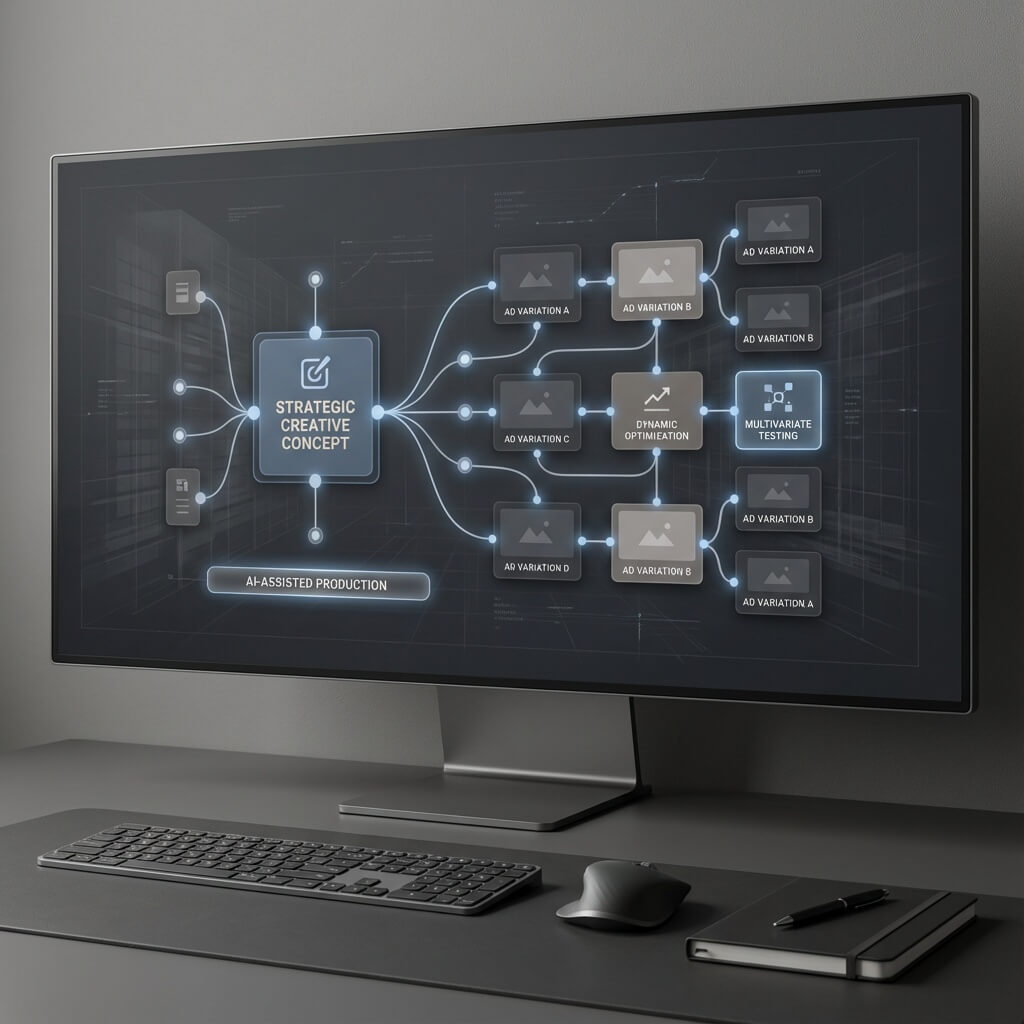
The brands winning on Facebook right now are not outspending you. They are out-creating you.
While you are waiting three weeks for your designer to finish a batch of ad variations, they are testing 30 new concepts this week. While you are stuck recycling the same creative because production is too slow, they are iterating daily based on real performance data.
The difference is not budget. It is how they use AI to multiply their creative output without sacrificing quality.
But here is what the AI hype train gets wrong: these tools are not magic. They do not replace the need for strategic thinking, creative judgment, or advertising expertise. In the hands of someone who does not know what they are doing, AI produces mediocre output at scale. The garbage is just faster.
In the hands of an expert who understands what makes advertising work, AI becomes a force multiplier. It lets them produce more of what actually converts without the traditional bottlenecks of cost, time, and production capacity.
This guide will show you what is actually possible with AI for Facebook ads today, what still requires human expertise, and how the best advertisers are combining both to outperform their competition.
Before we talk about AI, we need to talk about why creative has become so important. The advertising landscape has fundamentally changed in the past few years.
Five years ago, the edge in Facebook advertising was targeting. Smart advertisers built elaborate audience segments, lookalikes, and interest stacks. The game was finding the right people and showing them a decent ad.
That game is over. Facebook's algorithm has gotten so sophisticated that it can find your customers better than any human-built audience. The platform knows who is likely to buy, and it does not need you to tell it.
What the algorithm needs from you is creative variety. It wants to test different messages, different visuals, different formats with different segments of your potential audience. The more options you give it, the faster it learns what works with whom.
This means the advertisers who can produce the most quality creative have a structural advantage. More creative means more data. More data means faster learning. Faster learning means better results.
Traditional creative production cannot keep up with what the algorithm wants.
Agencies charge thousands of dollars for a handful of ad concepts. Turnaround times stretch into weeks. Revisions add more time and cost. By the time you have something to test, the market has moved on.
In-house teams face similar constraints. Even a dedicated designer can only produce so much. And if that designer is also handling website updates, email graphics, and social content, your ad creative gets whatever time is left over.
The math simply does not work. You need volume to feed the algorithm, but volume through traditional means is either too expensive or too slow.
Let's be specific about what AI tools can actually accomplish today. The capabilities are impressive, but they are not universal.
AI image generation has reached a point where it can produce ad-quality visuals for many use cases.
Product photography variations are now possible at near-zero marginal cost. Place your product in different settings, lighting conditions, and contexts. Test lifestyle imagery that would have required expensive photo shoots.
Diverse representation is another strength. Create imagery featuring different demographics, ages, and styles to test what resonates with different segments of your audience.
Rapid concept visualization lets you see ideas before committing to full production. Test whether a creative direction resonates before investing in professional photography.
That said, AI image generation still has limitations. Apparel and fashion remain challenging because getting fabric, fit, and drape right is difficult. Complex products with many details can come out wrong. And anything requiring specific brand assets needs careful setup. The technology improves monthly, but it is not yet a universal solution.
AI video generation has made remarkable progress. UGC-style content is now often indistinguishable from authentic user-generated footage.
You can create talking head videos without coordinating talent, scheduling shoots, or dealing with reshoots. Generate multiple variations with different presenters, scripts, and styles to test at scale.
Product demonstration videos, testimonial-style content, and educational explainers are all within reach.
But AI video is still best for specific formats. It excels at the short-form, authentic-looking content that works well in social feeds. It is not yet ready to replace high-production brand videos or complex narratives. Think of it as expanding what is possible, not replacing everything that exists.
Perhaps the most mature and immediately useful application of AI in advertising is copywriting.
Generate dozens of headline variations in minutes. Test different hooks, angles, and tones without the tedious work of writing each one manually. Create copy for different awareness levels and personas at scale.
AI copy still requires human direction and editing. Left to its own devices, it will produce generic, forgettable text. But when guided by someone who understands persuasion, brand voice, and what makes copy convert, it dramatically accelerates the production process.
Here’s where we get to the part that matters most. AI tools are powerful, but they cannot do the work that actually determines whether your ads succeed.
Strategic thinking and campaign architecture. AI cannot decide what to test or why. It cannot look at your business, understand your goals, and design a testing roadmap. It cannot determine whether you should focus on prospecting or retargeting, or how to structure your funnel.
Deep understanding of your customer. AI tools do not know your customer the way an experienced marketer does. They cannot identify the emotional triggers that drive purchase decisions or understand the objections that need to be overcome.
Judgment about what to test. Anyone can generate 100 ad variations. The skill is knowing which 5 to test first. That judgment comes from experience, from understanding what has worked before, from recognizing patterns that indicate potential.
Brand and positioning decisions. AI cannot tell you how to position your brand or what makes your offer unique. These strategic decisions require understanding your competitive landscape and your company's strengths.
Quality curation. AI can produce volume. It takes expertise to recognize which outputs are actually good. Without that filter, you end up testing mediocre creative at scale, which is a fast way to waste money.
There is a common misconception that AI makes expertise less important. The opposite is true. AI amplifies the gap between experts and amateurs.
AI tools are only as good as the direction they receive. Give them vague prompts and you get vague output. Give them generic instructions and you get generic results.
An amateur using AI image generation might prompt: "Create an ad for a supplement." They will get a generic supplement ad that looks like every other supplement ad.
An expert prompts with specificity: the exact emotion to convey, the visual style that has tested well, the elements that need to be present, the context that makes it scroll-stopping. They get something that looks intentional and performs.
The tool is the same. The results are completely different. The difference is the expertise guiding the tool.
Producing creative is only half the challenge. The other half is knowing what to do with it.
AI can generate 100 images in an hour. But which ones should you test? Which angles are worth pursuing? Which variations are meaningfully different versus superficially different?
Without expertise to curate the output, you end up testing randomly. You might get lucky. But systematic testing based on informed hypotheses will outperform random testing every time.
The expert advantage is knowing what is likely to work before spending money to find out. That judgment comes from pattern recognition developed over years of testing and millions of dollars in ad spend.
At the end of the day, creative is in service of strategy. The most beautiful, compelling ad in the world will fail if it is targeting the wrong people, making the wrong offer, or running at the wrong time.
AI cannot diagnose why your funnel is broken. It cannot decide when to scale budget or when to pull back. It cannot identify whether your problem is awareness, consideration, or conversion.
These decisions require the kind of experience that cannot be automated. They require understanding how all the pieces fit together and what levers to pull in which situations.
The advertisers getting the best results from AI are not using off-the-shelf tools with default settings. They have built workflows that combine AI capabilities with human expertise.
The best operators build custom prompting systems trained on what actually works. They study high-performing ads across their industry. They identify patterns in visuals, copy, and structure. Then they encode that knowledge into prompts that consistently produce better output.
They create brand-specific style guides that AI tools reference. Approved colors, fonts, image styles, tone of voice. This ensures AI output stays on-brand without constant manual correction.
They integrate multiple AI tools into seamless workflows. Image generation feeds into video creation which combines with AI copy. The output is a complete ad concept, not a single asset that still needs other pieces.
The winning formula is not AI alone or humans alone. It is a partnership where each contributes what they do best.
The human provides strategy, direction, and constraints. They determine what problem we are solving, who we are talking to, and what we want them to feel or do.
AI produces volume and variations. Given clear direction, it can generate dozens of options quickly and cheaply.
The human then curates, refines, and selects. They identify the promising directions, provide feedback for iteration, and make final decisions about what to test.
The result is 10x the creative output with the same quality bar. Not by lowering standards, but by removing production bottlenecks while maintaining strategic oversight.
With AI-augmented creative production, testing velocity changes completely.
Instead of testing 3 creative concepts per week, test 20. Instead of running one angle until it is exhausted, test multiple angles simultaneously. Instead of guessing what might work, let data tell you.
When you find a winner, AI helps you iterate faster. Generate variations on the winning concept. Test different hooks with the same visual. Test different visuals with the same hook. Explore the creative space around what works.
This approach finds winners faster and extends their life longer. Both of which directly impact your advertising profitability.
If you are considering AI for your Facebook advertising, here is how to approach it intelligently.
Do not try to replace your entire creative process overnight. Start by using AI to augment what you already do well.
If you have a winning ad format, use AI to create more variations of it. If you have strong copy, use AI to generate more headline options. Add AI to your existing process before trying to transform it.
This approach lets you learn what AI does well and where it falls short in your specific context. You build expertise incrementally rather than betting everything on a new approach.
The goal is not just to make ads faster. It is to learn faster.
Every ad you run is a test that generates data. More creative means more tests. More tests mean faster learning about what works with your audience.
Frame AI as a tool for accelerating learning, not just production. When you find something that works, AI helps you understand why by testing variations. When something fails, AI helps you pivot quickly to new approaches.
The biggest ROI comes from pairing AI tools with experienced operators who know how to use them.
An expert with AI produces dramatically better results than either an expert without AI or a novice with AI. The combination is where the magic happens.
If you are looking for advertising help, look for partners who have already mastered these workflows. Who have built custom systems for AI-augmented creative production. Who understand both the strategic side of advertising and the technical side of getting the most out of these tools.
The advertisers who will win over the next few years are not the ones with the biggest budgets. They are the ones who figure out how to combine human expertise with AI capabilities most effectively.
AI is not replacing advertising expertise. It is amplifying it.
The experts who embrace these tools will produce more, learn faster, and outperform those who do not. The gap between those who master AI-augmented advertising and those who stick with traditional approaches will only grow.
But tools alone are not the answer. AI in the hands of someone who does not understand advertising fundamentals just produces mediocrity at scale. The winning combination is deep expertise amplified by powerful tools.
If you want to work with advertisers who have already figured out how to leverage AI for better creative at scale, we can help.
Our talent has spent years developing workflows that combine strategic thinking with AI-powered production. The results speak for themselves.
%20(1).webp)